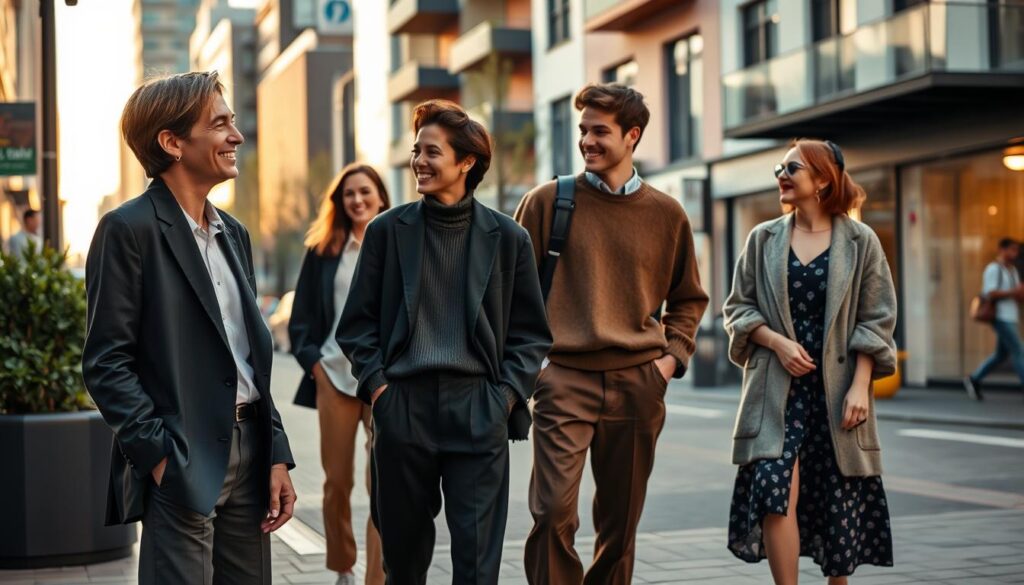
The fashion world is changing fast, moving towards inclusive fashion. People in the UK and the USA want clothes that don’t follow old gender rules. They’re looking for gender-neutral looks and soft tailoring.
Soft Tailoring & Gender-Neutral Looks: The Rise of Inclusive Fashion in the UK & USA
This change in fashion isn’t just a short-term thing. It shows a bigger move towards accepting and valuing diversity. Designers and brands are making clothes for all kinds of styles and tastes. This makes fashion open to everyone.
Key Takeaways
- The fashion industry is embracing inclusive fashion with a focus on gender-neutral looks.
- Soft tailoring is becoming increasingly popular in the UK and the USA.
- The trend reflects a broader cultural shift towards diversity and acceptance.
- Designers are creating collections that cater to a wide range of styles and preferences.
- Fashion is becoming more accessible to everyone, regardless of gender.
The Evolution of Gender-Neutral Fashion
Gender-neutral fashion started with movements against old gender rules. It has changed a lot over time. This change was due to many social, cultural, and economic factors.
Historical Context of Gendered Clothing
The history of gendered clothes goes back to the Victorian era. Back then, clothes showed your social status and gender.
From Victorian Era to Mid-20th Century Norms
In the Victorian era, clothes showed who you were. Men wore tailored suits, and women’s clothes were fancy. By the mid-20th century, the idea of different clothes for men and women was even stronger.
| Era | Men’s Fashion | Women’s Fashion |
| Victorian Era | Tailored suits, top hats | Corsets, long skirts |
| Mid-20th Century | Suits, ties | Dresses, skirts |
Early Pioneers Breaking Gender Norms
The 1960s and 1970s were key times. They saw people start to question old-fashioned rules.
Influential Moments from the 1960s to 1990s
Androgynous styles became popular. Designers like Yves Saint Laurent made clothes that didn’t fit into just men’s or women’s categories. The 1980s and 1990s saw more gender-bending in music and fashion.

gender-neutral fashion
Understanding Soft Tailoring in Modern Fashion
Soft tailoring is changing fashion by focusing on comfort and style. It uses relaxed shapes and soft fabrics. This makes it key in today’s fashion world.
Defining Soft Tailoring Techniques
Soft tailoring uses relaxed silhouettes and fluid fabrics. These elements make clothes more comfortable and flexible. It’s different from old-fashioned tailoring, which focuses on strict shapes and stiff materials.
Key Elements: Relaxed Silhouettes and Fluid Fabrics
The heart of soft tailoring is its focus on relaxed silhouettes and fluid fabrics. These features create clothes that are soft and move well. Fluid fabrics are key to getting that soft, flowing look.
The Intersection with Gender-Neutral Design
Soft tailoring meets gender-neutral design by making clothes that are comfy and don’t follow old gender rules. This mix helps people show their style in a way that’s open to all.
How Soft Tailoring Facilitates Inclusive Expression
Soft tailoring makes clothes that are both comfy and versatile. This lets people show their style without being stuck in old-fashioned rules. It lets everyone wear what feels right for them, no matter their gender.
Soft Tailoring & Gender-Neutral Looks: The Rise of Inclusive Fashion in the UK & USA
The UK and USA fashion markets are changing fast. Soft tailoring and gender-neutral fashion are leading the way. This change comes from what consumers want and how demographics are shifting.
Market Growth and Consumer Demand
More people want inclusive fashion, leading to market growth. Statistical trends show a big jump in sales of gender-neutral clothes.
Statistical Trends and Industry Reports
| Year | Market Size (UK) | Market Size (USA) |
| 2020 | $1.2B | $2.5B |
| 2021 | $1.5B | $3.0B |
| 2022 | $1.8B | $3.5B |
Demographic Shifts Driving Adoption
Demographic shifts are pushing for gender-neutral fashion. Gen Z and Millennials lead this change. They value inclusivity and diversity in their clothes.
Gen Z and Millennial Influence on Fashion Consumption
Gen Z and Millennials are shaping fashion. They want sustainability and inclusivity in their clothes. This is changing the fashion world.
Influential Designers Leading the Movement
Designers in the UK and the USA are leading a change in fashion. They are breaking down barriers and pushing the limits. Their new ideas are changing the industry and setting high standards for diversity and equality.
UK-Based Pioneers
The UK has many designers who are key to inclusive fashion. Established houses like Burberry and Alexander McQueen (now owned by Michael Kors) are leading this change.
From Established Houses to Emerging Talent
New talent is also making waves, with JW Anderson being a standout. These designers are challenging old norms and inspiring others.
American Designers Reshaping the Industry
In the USA, designers are also making a big impact. Tom Ford and Ralph Lauren are key in promoting diversity and inclusivity on the runway.
Innovative Approaches to Inclusive Design
American designers are known for their creativity. They use diverse models and promote body positivity. They also use technology and social media to connect with people and understand their needs.
Retail Response and Commercial Success
The fashion world is changing fast. More people want clothes that don’t follow old gender rules. This change comes from shoppers looking for clothes that fit everyone, not just one gender.
Mainstream Retailers Embracing Inclusive Collections
Big-name stores are now adding gender-neutral clothes to their shelves. They’re doing this because customers want it and it’s good for business. It helps them reach more people.
Case Studies of Successful Gender-Neutral Lines
Some stores have really hit it off with their gender-neutral lines. For instance, Zara has ‘Z by Zara’ and Topshop teamed up with JW Anderson. These lines have won over customers and helped the stores do well.
| Retailer | Collection Name | Key Features |
| Zara | Z by Zara | Minimalist designs, neutral color palette |
| Topshop | JW Anderson Collaboration | Androgynous silhouettes, mix of textures |
E-commerce and Direct-to-Consumer Brands
Online stores and direct brands are big in inclusive fashion too. They can quickly change to what customers want. They offer lots of inclusive clothes and accessories.
Digital-First Approaches to Inclusive Fashion
Brands like Phluid Project and Kirrin Finch lead digitally. They pick out cool, gender-neutral clothes and accessories. They also listen to their community and customers a lot.
These brands are doing great, showing inclusive fashion can work. As more people want diverse clothes, stores that listen to this trend will do well.
Cultural Impact and Social Significance
The inclusive fashion movement is changing how we see and use clothes. It’s not just about what we wear but how we feel about it. This change is seen in fashion designs and how we talk about clothes online.
Celebrity Influence and Media Representation
Celebrities are big in showing us what inclusive fashion is. They wear different styles on the red carpet and share them on social media. This makes fans feel okay about being themselves.
Red Carpet Moments and Social Media Impact
Red carpet events now show off inclusive fashion. Stars like Harry Styles and Billie Eilish are breaking old rules. Social media makes these moments big, starting talks about who we are and how we express ourselves.
Community Empowerment Through Fashion
Fashion is now a way to help communities, like the LGBTQ+ one. Brands are starting to support LGBTQ+ causes through their clothes and ads.
LGBTQ+ Perspectives and Advocacy
The inclusive fashion world is linked to LGBTQ+ rights. Designers use their work to help with LGBTQ+ issues. This builds a stronger community and helps make society more welcoming.
The fashion world is always changing, and so is its impact on us. It’s leading to a more diverse and accepting world, one outfit at a time.
Challenges and Criticisms in the Inclusive Fashion Movement
The inclusive fashion movement is making big strides, but it faces many challenges. These issues threaten its success and impact. It’s vital to tackle these criticisms to keep the movement strong and effective.
Authenticity vs. Commercialization Concerns
The difference between real inclusion and marketing tricks is often hard to see. Designers and brands must find a balance. They need to promote diversity without just using it to sell more.
When Marketing Overshadows Genuine Inclusion
Some say brands use inclusive fashion to look good, not because they really care about diversity. This can lead to accusations of tokenism. Brands might only use diverse models or designs to boost their image.
Accessibility and Pricing Issues
Another big problem is making inclusive fashion affordable. Even though high-end designers are getting on board, their prices are too high for many people.
Addressing the Affordability Gap
To fix this, brands could offer cheaper options or work with budget-friendly retailers. This way, more people could enjoy inclusive fashion.
| Challenge | Description | Potential Solution |
| Authenticity vs. Commercialization | Balancing genuine inclusion with marketing strategies | Ensure diverse representation and commitment beyond marketing campaigns |
| Accessibility and Pricing | High prices limiting accessibility to inclusive fashion | Offer affordable lines or collaborations with mass-market retailers |